CASE HISTORY No. 1
Casing diam: 2.5 inches
Elevation: 18 feet
Rate per hr: 1 ton
Material: sand
 |
FOUNDRY
Queensland, Australia
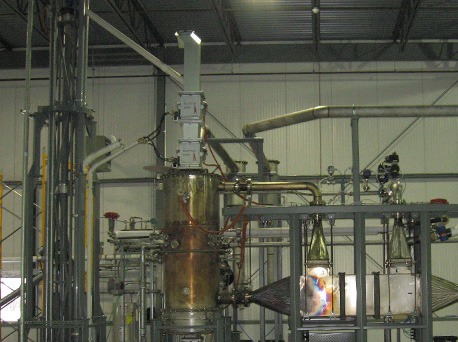
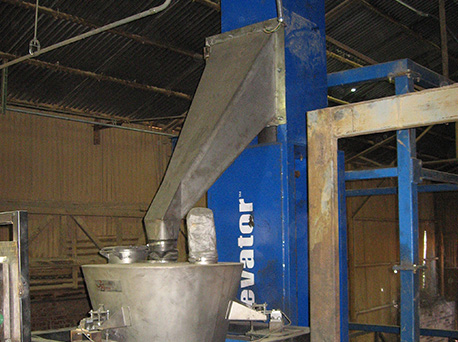
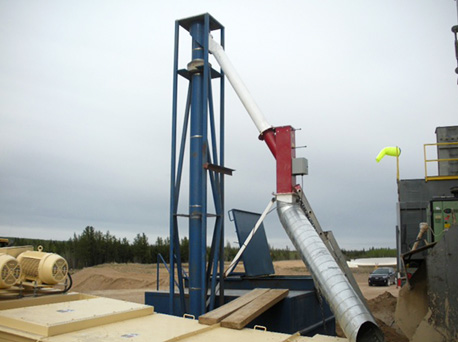
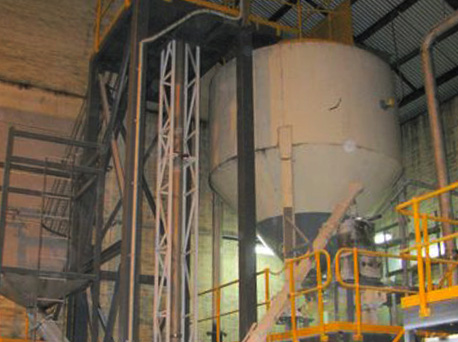
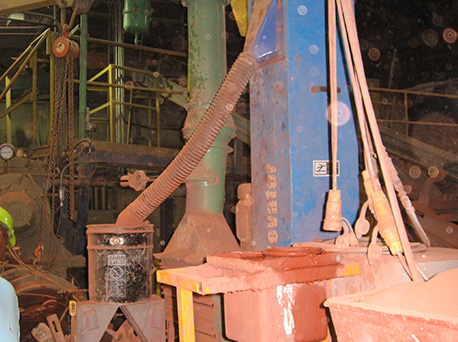
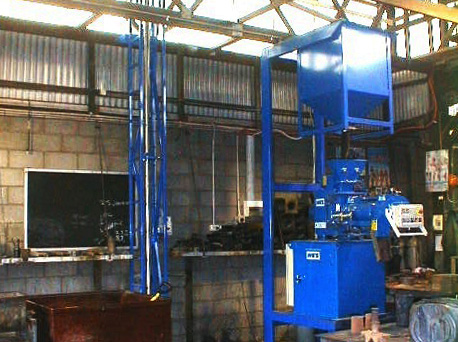
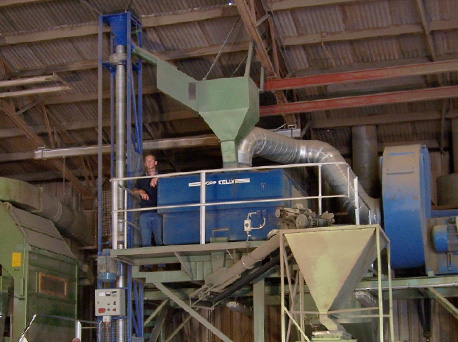
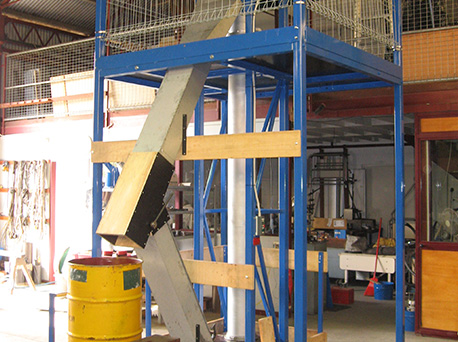
A small foundry purchased a new mixing machine that automatically blends binding agents into foundry sand before casting. Sand must be elevated to a height of 18 feet to fill the mixer’s raw sand hopper.
The foundry owner initially considered an inclined screw conveyor for the job, but lacked sufficient floor space.
The problem was solved with an OLDS ELEVATOR™ vertical conveyor. Occupying less than 3 square feet of floor space, it delivers sand to the mixer’s hopper as needed. A level switch in the hopper turns on the flow of sand from the OLDS ELEVATOR™ vertical conveyor when needed and shuts it off when the hopper is full.
The casing diameter of this OLDS ELEVATOR™ design is 2.5 inches and sand is delivered to a height of 18 feet at a rate in excess of 1 ton per hour. |
| |
CASE HISTORY No. 2
Casing diam: 4 inches
Elevation: 21 feet
Rate per hr: 6 tons
Material: sand
 |
FOUNDRY
Mazatlan, Mexico
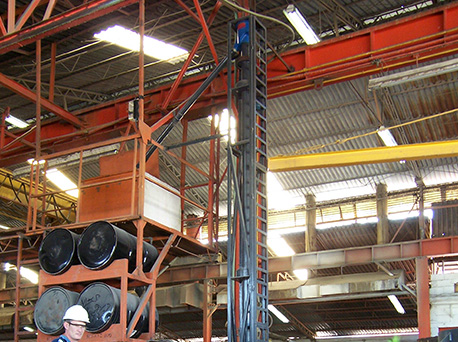
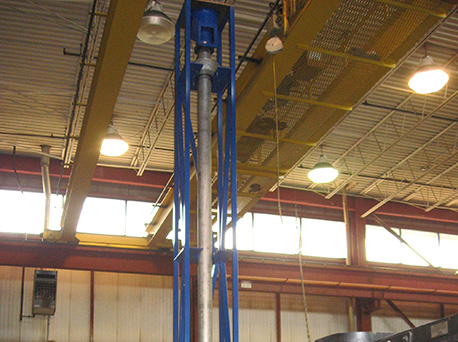
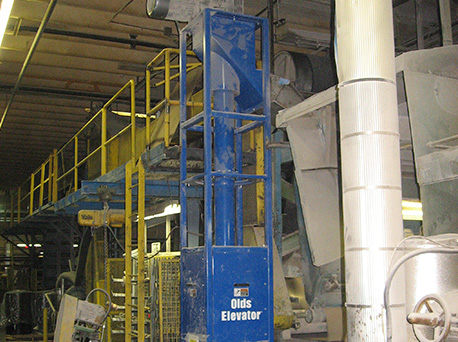
A mid-size foundry was seeking an efficient method to elevate foundry sand to a height of 21 feet to feed their sand mixing machine.
The foundry had been using a crane to hoist bags of sand up to workers who emptied the bags into the mixer’s hopper. The foundry owners considered purchasing a pneumatic conveyor to elevate their sand.
Instead, they purchased a 4-inch diameter OLDS ELEVATOR™ vertical conveyor for a fraction of the cost of the pneumatic conveyor. It delivers sand to a height of 21 feet at a rate of 6 tons per hour. |
| |
|
CASE HISTORY No. 3
Casing diam: 6 inches
Elevation: 25 feet
Rate per hr: 10-12 tons
Material: crops |
FARMERS' COOPERATIVE
Queensland, Australia
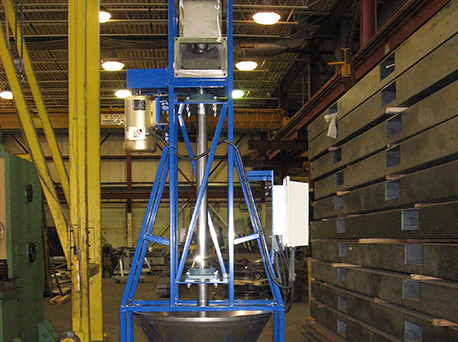
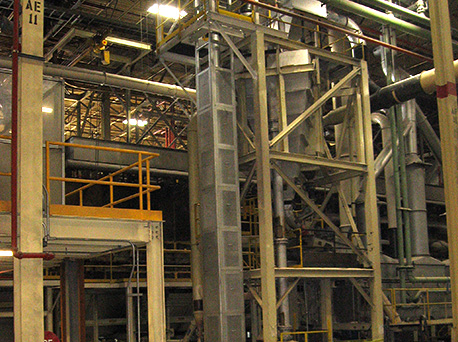
A crop processing facility sought to replace the 30-year old bucket elevators at their grading and sorting plant. The facility processes beans, wheat, corn and oats. Five (5) bucket elevators were deployed to feed various sorting, grading and packaging units at the plant.
The plant had decided to replace the 5 bucket elevators with 7 Tubeveyors (inclined belt conveyors with U-shaped belts). Prior to installing the Tubeveyors they learned about the OLDS ELEVATOR™ vertical conveyor.
A series of trials were conducted with a four-inch diameter OLDS ELEVATOR™ test unit to determine whether it would handle the wide variety of beans and seeds that the plant processes. All products were easily elevated in the test machine. The customer was also pleased with the gentle handling of the OLDS ELEVATOR™ design.
Their entire range of products was elevated with little or no damage and virtually no dust was created. The four-inch test unit could elevate their crops at a rate of 10-12 tons per hour. The plant required 12 tons per hour to be elevated.
Prior to building actual working units for the plant, a six-inch diameter test unit was constructed to document flow rate performance. This unit elevated the full range of crops at 10-12 tons per hour, depending on the crop.
The facility ultimately replaced their 5 bucket elevators with just two OLDS ELEVATOR™ vertical conveyors, saving thousands of dollars in capital costs and recovering significant floor space at their plant. The elevators are fitted with variable speed drives so the plant can control the flow rate with precision. A great reduction in the ambient noise level of the plant was also realized. |
| |
CASE HISTORY No. 4
Casing diam: 4 inches
Elevation: 21 feet
Rate per hr: 2 tons
Material: nuts, shells
 |
MACADAMIA NUT GROWER
Queensland, Australia
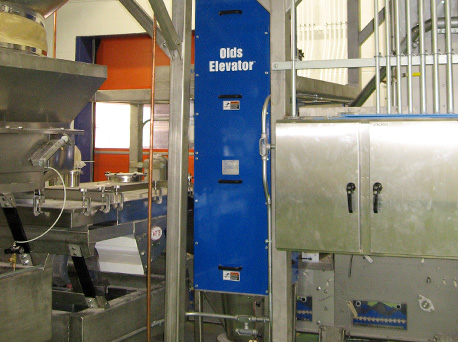
A macadamia nut grower was seeking to automate their nut processing operation. Macadamia nuts are first dried, then sorted, cracked and packed for sale.
An OLDS ELEVATOR™ vertical conveyor was designed and installed to elevate whole nuts to fill a drying silo. Its discharge can be switched to transfer the dried nuts instead to a storage silo prior to cracking and packaging.
The same OLDS ELEVATOR™ unit is also used to elevate the shells after cracking. The shells are used as fuel by area industry. |
| |
CASE HISTORY No. 5
Casing diam: 4 inches
Elevation: 15 feet
Rate per hr.: 2 tons
Material: gypsum powder |
GYPSUM COMPANY
Illinois, USA
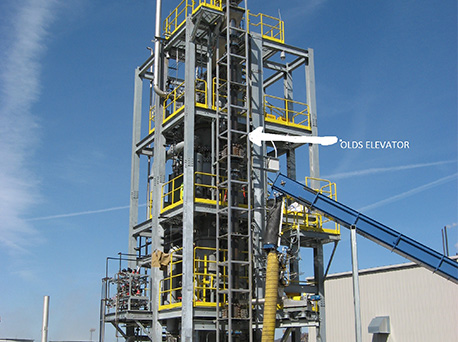
A gypsum company wanted to test the OLDS ELEVATOR™ technology on a range of products from raw gypsum powder to refined gypsum product such as Plaster of Paris and stucco powders.
A mobile OLDS ELEVATOR™ was designed for their Research and Development center for use in a Pilot Plant to feed their kiln.
Pending successful completion of trials at the Pilot Plant the company expects to use OLDS ELEVATORS™ to replace 3 pieces of equipment in new plants: bucket elevator, overhead storage hopper and volumetric feeder. By using the OLDS ELEVATOR™ to feed their kiln directly, they will also be able to reduce the height of new plants from 4 stories to 2 stories. |
| |
CASE HISTORY No. 6
Casing diam: 6 inches
and 4 inches
Elevation: 35 feet
and 25 feet
Rate per hr.: 15 tons
and 4 tons
Material: Beans
and Seeds
 |
FARMERS' COOPERATIVE
Queensland Australia
This crop processing plant purchased two OLDS ELEVATORS™ in 2004 to replace some old bucket elevators. When a new product bagging operation was proposed the management evaluated their equipment and manpower costs. If approved, they would need two new elevators to supply product to the new bagging lines.
They determined that OLDS ELEVATORS™ would be the most economical method to feed the bagging operation even though they were more expensive to buy than conventional elevators. Using experience gained from using their first two OLDS ELEVATORS™ the plant management determined that the new bagging operation would need less manpower to operate it if OLDS ELEVATORS™ were employed.
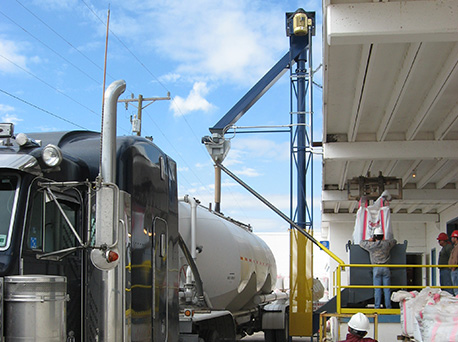
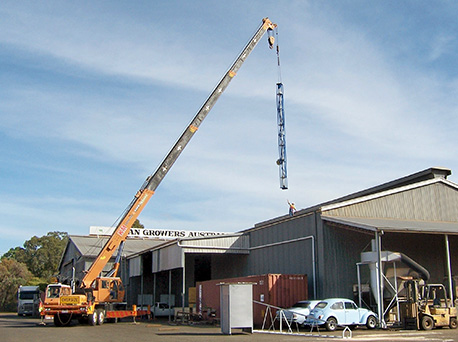
Two new OLDS ELEVATORS™ were installed in 2006. A 4-inch diameter by 25 foot tall unit and a 6-inch diameter by 35 foot tall unit shown being installed through an opening in the roof. |
| |
CASE HISTORY No. 7
Casing diam: 2.5 inches
Elevation: 7 feet
Rate per hr.: 1 ton
Material: Various |
INDUSTRIAL SCREENER MANUFACTURER
USA
An American manufacturer of industrial screening equipment had been using a noisy bucket elevator to feed their demo screener used at trade shows. The bucket elevator was so loud that it was difficult to hold a normal conversation while standing near the demo screening machine.
One day someone pointed out to the manufacturer that an OLDS ELEVATOR™ could feed their demo screener and do the job quietly.
The bucket elevator was replaced with a small OLDS ELEVATOR™. Now their sales staff can point out the features and benefits of their screening equipment without having to raise their voices to their customers. |
| |
CASE HISTORY No. 8
Casing diam: 6-inches
and 4 inches
Elevation: 15.5 feet
Rate per hr.: 15 tons
and 4 tons
Material: Gravel
and Sand |
CONCRETE BLOCK AND
PAVER MANUFACTURER
Queensland Australia
A manufacturer of pre-cast concrete building and paving blocks needed to elevate sand and gravel to feed a mixer.
Two OLDS ELEVATORS™ were selected for the job. One 6-inch diameter elevator delivers 15 tons per hour of gravel and one 4-inch diameter elevator delivers 4 tons per hour of sand.
Each OLDS ELEVATOR™ is fed by a belt conveyor about 2 feet above floor level. |
| |
Case History No. 9
Casing Diameter: 8 inch
Elevation: 24 feet
Rate per hour: 33 tons
Material: Ceramic Beads
 |
CERAMIC BEAD MANUFACTURER
Louisiana, USA
A manufacturer of ceramic beads was seeking to reduce the amount of time spent cleaning out the conveyor used to load bulk transport trucks between loading different product grades. Having utilized bucket elevators and cleated belt conveyors they found it still took more than 1 hour to prepare the conveyor for a new grade of product for loading.
OLDS ELEVATOR™ designed and built an elevator that not only exceeded the flow rate requirement of 25 tons per hour but the changeover time to clean the elevator was reduced to 10 minutes. Trucks are loaded with 50,000 pounds of ceramic beads in 45 minutes. |