
(603) 882-8899
• 12 Park Avenue,
Hudson, NH 03051
(603) 882-8899
• 12 Park Avenue,
Hudson, NH 03051
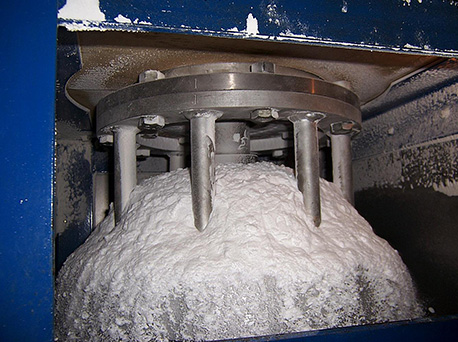
For a number of bulk materials, dust explosion is a very real risk, particularly when it comes to bucket elevators. Businesses in a wide range of industries around the world have experienced dust explosions with consequences ranging from facility damage and work delays to tragic loss of life.
Dust explosions can occur during elevation of certain bulk materials, particularly in bucket elevators. More than 300 dust explosions have killed more than 120 workers in grain silos, sugar plants and food processing plants over the past three decades, and most are preventable by removing fine-grain dust as it builds up.
As explained by the OSHA published article, “Combustible Dust: An Explosion Hazard” dust created by materials being conveyed can become a powerful accelerant when other risk factors are present. Under some conditions, even materials that are not inherently flammable (such as aluminum and Iron) become explosible when they are in dust-form.
Oxygen is present if sufficient air is in the elevator. Most conventional vertical elevation systems do not operate in a fully-flooded state, making Oxygen readily available for any potential ignition.
With both fine dust and oxygen available in high demand, the smallest spark from a broken bucket or overheated bearing can result in catastrophic facility damage and even loss of life.
Bucket elevators routinely operate in conditions where both Dust and Oxygen are constantly present. Only the condition of the bearings, buckets, belts or chains determine if and when a spark or flame could potentially cause a dust explosion.
The most notable dust explosion to date was that of the Imperial Sugar Company, which took place at the refinery’s Port Wentworth, GA facility in 2008. According to the final report by the U.S. Chemical Safety Board, the dust explosion at this particular sugar refinery was caused by a combination of excessive dust from bucket elevators and an ignition point that likely began when a number of electric motors covered in sugar dust overheated¹. Other potential ignition sources could have been a spark, friction-induced hot surface, static discharge, or open flame.
¹"Investigation Report: Sugar Dust Explosion and Fire, Imperial Sugar Company." U.S. Chemical Safety and Hazard Investigation Board(2009): 35. Web.
Unlike traditional bucket elevators, OLDS ELEVATORS™ operate in a “flooded” mode where the rotating casing and screw are filled with the material being conveyed. There is insufficient oxygen in the system to support combustion in the unlikely event that a spark should occur.
Because the Olds Elevator System operates in a fully flooded system with only one moving part, dust has no opportunity to form, oxygen has no space to accumulate, and sparks are virtually impossible. This eliminates the primary causes of a dust explosion, while also relaxing the need for vigorous housekeeping to prevent potentially dangerous equipment malfunctions.