|
||||||||
OLDS ELEVATOR™ PublicationsA Radical Approach to the Vertical Conveyance of Bulk Materials: the OLDS ELEVATOR™
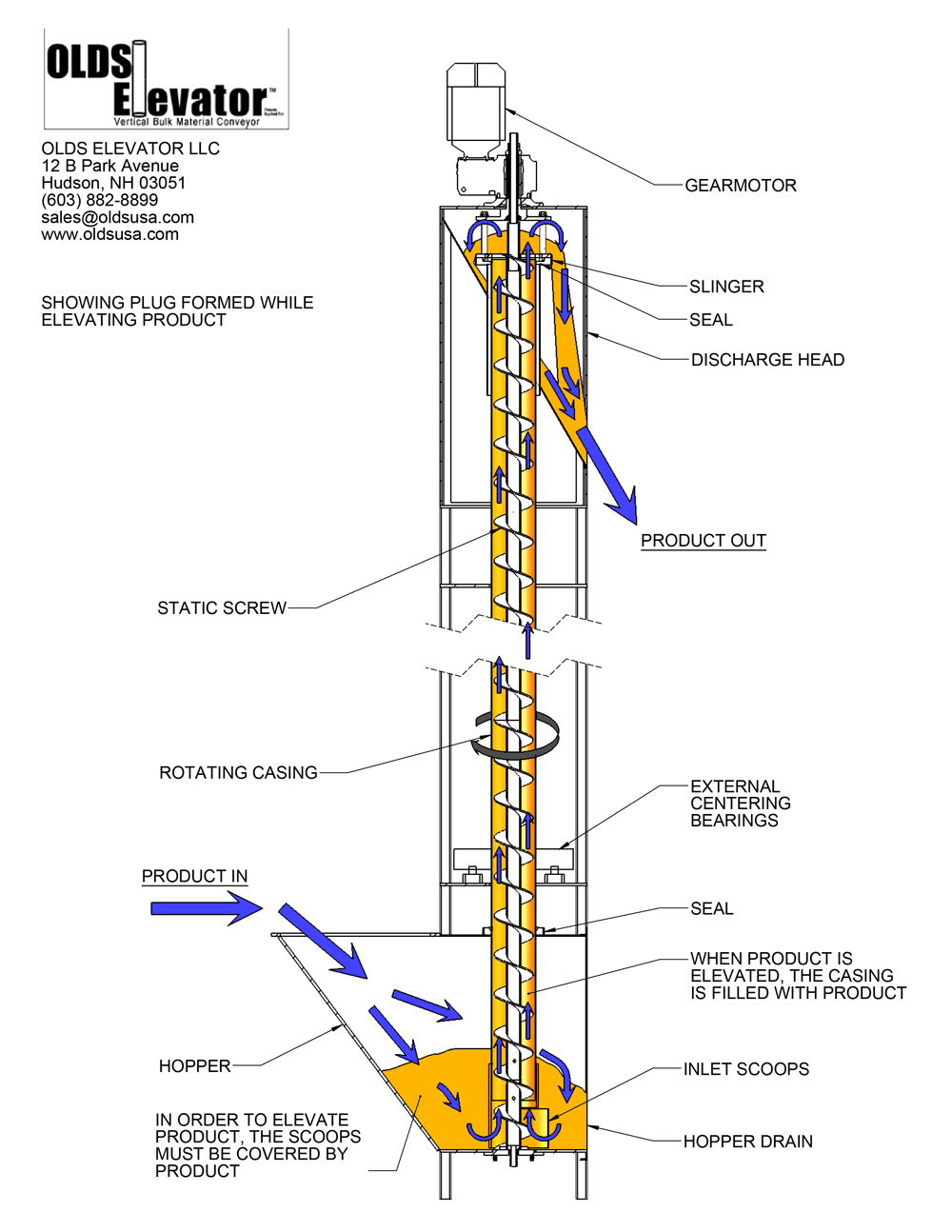
Figure 5 – 150 mm (6”) by 7.5m and 7 m lift OLDS ELEVATORS™ at Bean Growers Australia. 3. New vertical elevator design: the OLDS ELEVATOR™ Operating Principle The bulk material flows smoothly and continuously up the screw, to discharge evenly over the 'slinger' into the surrounding discharge chute (figure 10). The delivery rate is directly related to the rate of rotation of the casing. Therefore consistent control of the product delivery rate is possible – in fact from any rotational speed above 0 RPM. Further explanation and comments The in-feed scoops control the rate of handling and deliver material into the casing with a pressure that initiates motion up the lower portion of the screw flight. The internal mechanism then takes over to move the material along the inclined face of the screw flight by frictional drag of the product on the rotating boundary layer. This sealing and elevating motion of the product is reinforced at the inlet region by further material entering the in-feed scoops. The collection and transfer of material takes place in settled conditions, rather than the dilated turbulence of a dynamic vortex. The density difference and quiescent movement allows a greater mass of material to be elevated. The effectiveness of the mechanical extraction of material from the feed hopper by the rotating scoops contrasts sharply with the resisting pressure offered by prior contents in the rotating screw of a conventional screw elevator. Instead of needing a steep inlet chute at one side of the casing to generate the horizontal pressure to overcome the centrifugal force of rotating product, the new elevator offers a flow-gathering dimension larger than the casing diameter virtually at floor level. This enables difficult flow materials to be offered to the machine at low level via a mass flow inlet section on the feed hopper, whereas the bottom bearing and seal of a standard screw elevator, followed by a steep inlet chute on one side of the casing that extends some distance up the length of the casing inevitably means a high rim height and/or low holding capacity of a conventional feed hopper, even for free flowing products. Difficult flow materials usually require a separate feed screw to deliver the bulk material into a standard form of screw elevator.
Most machines made to date utilize twin in-feed scoops on the rotating casing. This is superficially attractive as a symmetrical feature to avoid out-of balance forces on the casing. A single in-feed scoop version (with an opposite balance weight) is beneficial for delicate handling, sensitive feed control and to enlarge the swept pick-up area for difficult flow or larger particle size products. It is essential to ensure that the elevating capacity is not exceeded by the collecting mechanism otherwise some material in the flow path of the scoop will move around or over the scoop instead of into the casing. Optimization needs to be tempered with a margin of safety to deal with variable product conditions. A feature of the elevator is that, as with a normal screw elevator, it remains full of product unless the machine is run on for a while after the feed hopper empties, and even then will not completely self-clear. This means that a free flowing product will tend to run back down the casing when the elevator stops and the machine has to re-start with a section of the casing full. Long elevators may have a slightly shorter pitch in the lower section of the screw, to give a better wedging action and allows material to accelerate away when it reaches the longer pitch section.CONTINUE >> Contrasting the OLDS ELEVATOR™ with conventional screw elevators: A Radical Approach to the Vertical Conveyance of Bulk Materials: the OLDS ELEVATOR™ |
Engineering and Support Free Video Taped Test Materials Handled Performance Features Standard Configurations Test Laboratory OLDS ELEVATOR™ LLC 12 B Park Ave. Hudson, NH 03051 Call 603.882.8899 Fax 603.882.8855 Email us today! OLDS ELEVATOR™ Advantages 1. Olds Elevator Innovative Material Elevation
|
| Bulk Material Handling Systems | Dense Abrasives | Dust Control | Dust Explosion Prevention | Free Video Taped Test | Gentle Handling Dust-Free Elevation Materials Handled | Mobile Units | Pneumatics versus Olds Elevators | Performance Features | Standard Configurations Test Laboratory | Vertical Elevation | Volumetric Feeders | OLDS ELEVATOR™ Site Map Hudson, NH Website Design Development Dissatisfied by conventional methods with bucket elevators, screw elevators, pneumatic conveyors and inclined belt conveyors? OLDS ELEVATOR™ has |